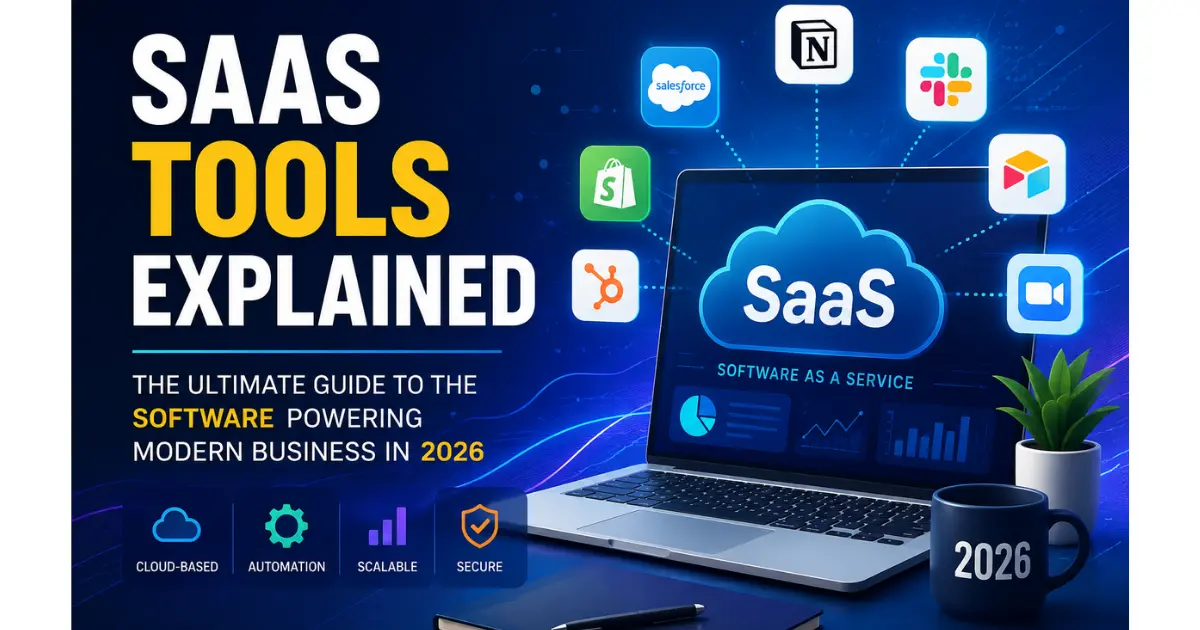
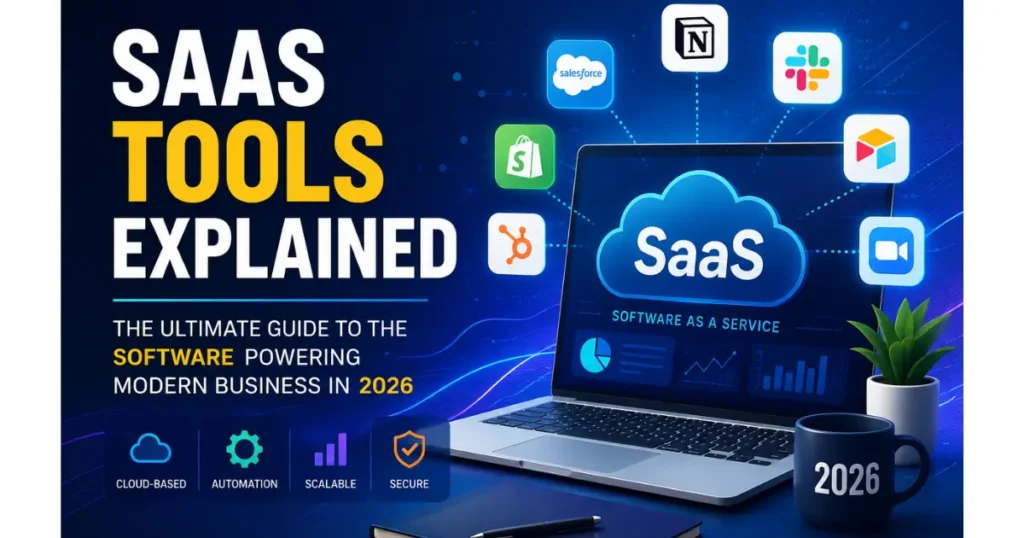

Open almost any modern business today, and you’ll find it running on software it doesn’t own, installed on servers it’s never seen, updated automatically without anyone lifting a finger. That’s SaaS — Software as a Service — and it has quietly become the operating system of modern business, from one-person freelance operations to companies with thousands of employees.
What Does “SaaS” Actually Mean?
SaaS refers to software that’s hosted in the cloud and delivered to users over the internet, typically through a monthly or annual subscription, rather than software you purchase once, install directly on your own computer, and manage yourself. Instead of buying a disc or downloading an installer, you simply log into a website or app, and the provider handles everything on the backend — servers, updates, security patches, and infrastructure — while you focus purely on using the tool itself.
How SaaS Changed the Software Industry
This model represents a fundamental shift from how software used to work. Traditional, “on-premise” software required businesses to purchase a license outright, install it on their own hardware, and take on the burden of maintaining, updating, and securing it themselves — often involving dedicated IT staff and significant upfront cost.
SaaS flipped this entirely: cloud computing infrastructure made it possible for providers to host software centrally and serve it to unlimited customers simultaneously, while customers pay an ongoing, predictable fee instead of a large one-time purchase. This shift, which accelerated dramatically over the past two decades, is why nearly every business tool you interact with today — from email marketing platforms to project management boards to accounting software — now runs as SaaS rather than a program you’d install from a disc.
A Brief History: How SaaS Became the Default
This shift didn’t happen overnight. Early cloud-based tools in the early 2000s proved the model could work at real scale, broadband internet access became fast and reliable enough to support genuinely responsive, browser-based software, and businesses gradually grew comfortable trusting critical operations to infrastructure they didn’t directly control or physically manage themselves.
By the 2010s, SaaS had moved from a novel, somewhat experimental approach to the default expectation for virtually all new business software, and that trajectory has only accelerated since, particularly as remote and hybrid work made cloud accessibility a practical necessity rather than a convenience.
The Scale of SaaS Today
The global SaaS industry is now valued in the hundreds of billions of dollars annually, with projections pointing toward continued strong growth as more businesses of every size shift core operations to cloud-based tools. This growth spans virtually every business function imaginable — companies that once ran on filing cabinets, desktop spreadsheets, and locally installed software now coordinate entire operations through browser tabs, often without a single piece of traditional software anywhere in their daily workflow.
For affiliate marketers, this growth represents a genuinely significant opportunity — as covered in our review of PartnerStack, one of the leading networks connecting affiliates with SaaS companies, understanding the different categories of SaaS tools available to promote is the first step toward building real, sustainable affiliate income in this space.
What This Guide Covers
In this guide, we’ll walk through the major categories of SaaS tools you’ll encounter on platforms like PartnerStack — what problem each category solves, why it matters to the businesses that rely on it, and real examples of tools within each category — giving you a genuinely useful foundation for understanding this space before you start promoting anything specific.
Want access to hundreds of high-paying SaaS affiliate programs? Read our PartnerStack review to learn how the platform works and whether it’s worth joining in 2026. https://ezmakaffiliates.com/partnerstack-affiliate-program-review-2026/
Why SaaS Dominates PartnerStack’s Marketplace
PartnerStack, as covered in our dedicated review, was built specifically around B2B SaaS companies rather than general consumer products — and understanding why reveals something important about the SaaS business model itself.
Unlike a one-time product sale, a SaaS subscription generates recurring revenue for as long as a customer stays subscribed, which makes SaaS companies uniquely motivated to invest in ongoing partner and affiliate relationships rather than one-off promotional pushes. A single successful referral doesn’t just produce one commission — it can produce a customer relationship worth months or years of subscription revenue, which is why many SaaS affiliate programs are willing to offer generous, sometimes recurring, commission structures in return.
This recurring-revenue dynamic also explains why SaaS companies tend to value affiliates who deeply understand their specific product category, rather than generic promoters. A content creator who genuinely understands the problem a project management tool solves, for example, can write far more convincing, specific content than one treating it as an interchangeable product — which is exactly why understanding these categories at a foundational level, as this guide aims to provide, genuinely matters for anyone serious about SaaS affiliate marketing.
There’s also a structural reason SaaS companies gravitate toward marketplace-style networks like PartnerStack specifically, rather than only running programs independently. Managing dozens or hundreds of individual affiliate relationships directly requires significant internal resources — tracking, payments, communication, fraud prevention — that a centralized marketplace largely handles on the company’s behalf. This lets even smaller, earlier-stage SaaS companies participate in affiliate marketing without needing to build that infrastructure themselves, which is part of why the marketplace has grown to include hundreds of companies spanning such a wide range of categories and company sizes.

Productivity & Project Management Tools
The problem this category solves: Before cloud-based productivity tools, teams coordinated work through a patchwork of email threads, spreadsheets, and in-person meetings — a system that broke down quickly as teams grew or went remote. Tasks fell through the cracks, deadlines were tracked inconsistently across different people’s personal systems, and there was often no single source of truth for what a team was actually working on at any given moment.
Why it matters: Productivity and project management tools solve this by giving teams a shared, visual workspace where tasks, deadlines, and progress are tracked centrally and updated in real time. This matters enormously as remote and hybrid work has become standard practice — without a centralized system, distributed teams have no reliable way to stay aligned on priorities, and managers lose visibility into what’s actually getting done. These tools have become foundational infrastructure for millions of businesses, not a nice-to-have extra.
Real example: ClickUp. Billed as an all-in-one productivity platform, ClickUp centralizes tasks, documents, goals, and team communication into a single workspace, aiming to replace the scattered tool stack many teams previously relied on. On PartnerStack’s marketplace, its affiliate program uses a tiered cost-per-acquisition structure based on where the referred signup is located — commonly cited around $28 for a new workspace signup from a top-tier country, scaling down for other regions — giving affiliates a clear, predictable payout per successful referral rather than a percentage that fluctuates with subscription pricing changes.
For affiliate marketers, this category tends to perform well with audiences already interested in productivity, remote work, freelancing, or business efficiency content, since the pain point — disorganized, scattered work management — is something almost every growing team eventually experiences and actively searches for solutions to.
Content that performs particularly well in this category includes head-to-head comparisons between competing productivity platforms, workflow templates readers can implement immediately, and case-study-style breakdowns of how a specific team structure benefits from centralized task management — formats that let readers see themselves in the solution rather than reading abstract feature descriptions.
Marketing & Conversion Optimization Tools
The problem this category solves: Getting visitors to a website is only half the battle — the other half is figuring out what to actually do with them once they arrive. Businesses historically had very limited visibility into how visitors behaved on their sites, relying largely on guesswork when deciding how to improve signup forms, landing pages, or checkout flows, often making costly design changes based on assumption rather than evidence.
Why it matters: Marketing and conversion optimization tools solve this by giving businesses concrete, testable data on what actually works — running controlled experiments, capturing attention with targeted on-site messaging, and translating raw visitor traffic into measurable results like signups, leads, or sales. In a business environment where paid advertising and traffic acquisition costs continue rising, squeezing more value out of existing traffic through better conversion practices has become one of the highest-leverage areas a business can invest in.
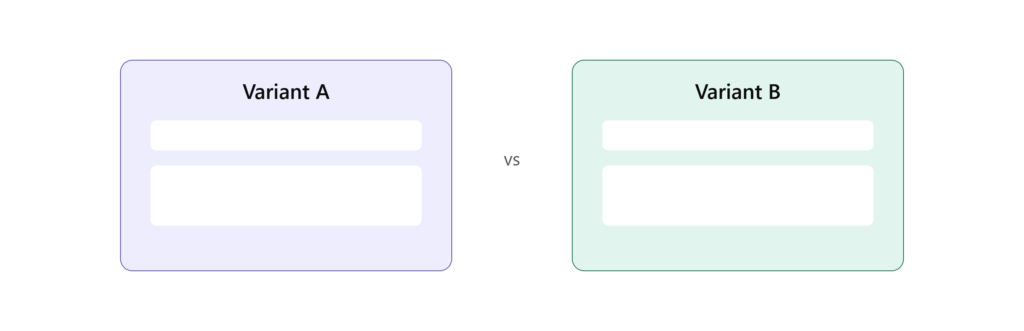
Real examples: VWO and Hello Bar. VWO is a widely used A/B testing and conversion rate optimization platform, allowing businesses to test different versions of a webpage against each other and let real visitor data — not guesswork — determine which performs better. Hello Bar, by contrast, focuses on a narrower but highly practical use case: creating targeted on-site messages, popups, and bars designed to capture visitor attention at exactly the right moment, whether that’s promoting an offer or encouraging an email signup. Both are available through PartnerStack’s marketplace, giving affiliates in the marketing, e-commerce, and growth space multiple related options to explore depending on which specific angle — deep testing versus quick on-site messaging — best matches their audience’s needs.
This category tends to resonate strongly with marketing-focused, e-commerce, and growth-hacking audiences, since conversion optimization is a topic business owners actively research once they’ve solved the more basic problem of simply getting traffic to their site in the first place.
Well-performing content in this space often walks through specific before-and-after case studies, explains testing methodology in accessible terms for non-technical readers, or compares tools by use case — such as which option suits a small e-commerce store versus a larger SaaS company running more sophisticated, multi-variant experiments.
HR & Business Operations Tools
The problem this category solves: Managing employees — hiring, onboarding, payroll compliance, benefits administration, handling terminations correctly — involves a dense web of legal requirements that vary by location and change frequently. Small businesses in particular often can’t justify hiring a dedicated, in-house HR professional, yet getting compliance wrong can expose them to real legal and financial risk.
Why it matters: HR and business operations software solves this by essentially packaging HR expertise and compliance processes into an accessible, affordable subscription product, letting small and mid-sized businesses handle employee management professionally without the overhead of a full internal HR department. As labor regulations continue to grow more complex and remote work has scattered employees across different jurisdictions with different rules, this category has only grown more essential rather than less.
Real example: Bambee. Bambee positions itself as outsourced HR support specifically built for small businesses, combining software with access to dedicated HR expertise to help companies manage compliance, policies, and employee relations without building an internal team from scratch. Available through PartnerStack’s marketplace, it represents a strong fit for affiliates covering small business operations, entrepreneurship, or startup-focused content, where HR compliance is a genuine, recurring pain point business owners actively search for solutions to.
For affiliate marketers, HR and operations tools tend to convert best with audiences who run or manage small businesses directly, rather than general consumer or hobbyist audiences, since the pain point is specifically tied to employing other people — a need that only exists once a business reaches a certain size.
Content built around specific compliance milestones — hiring a first employee, navigating a termination correctly, or expanding into a new state or country with different labor laws — tends to attract readers at exactly the moment they’re most motivated to find a solution.

Social Listening & Brand Monitoring Tools
The problem this category solves: In a world where customers post reviews, complaints, and mentions of brands across social media, forums, and review sites constantly, businesses have almost no way of manually tracking what’s being said about them across the internet in real time. A single viral complaint or a sudden shift in public sentiment can happen and spread before a company even becomes aware of it.
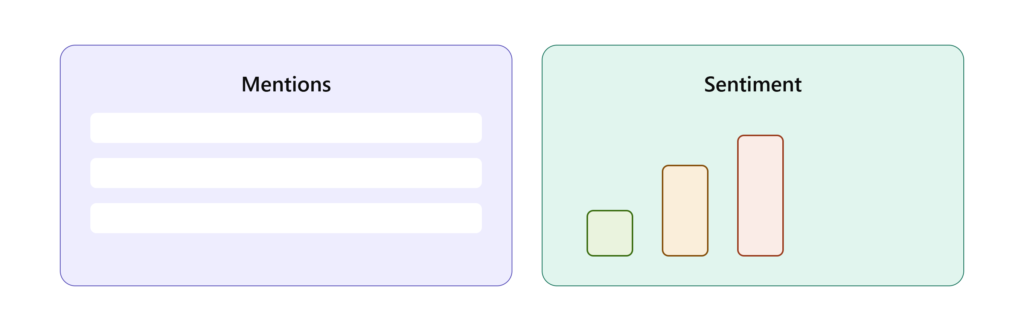
Why it matters: Social listening and brand monitoring tools solve this by automatically scanning the internet for brand mentions, aggregating sentiment data, and alerting businesses to conversations happening about them — turning an impossible manual task into an automated, searchable system. This has become increasingly important as social media’s role in shaping public perception has grown, giving businesses the ability to respond quickly to both crises and opportunities, and to understand competitor positioning through the same lens.
Real example: Brand24. Brand24 provides real-time monitoring of brand mentions across social media, news sites, blogs, and forums, giving businesses visibility into public sentiment and emerging conversations without needing to search manually across dozens of platforms. Available through PartnerStack’s marketplace, it’s a natural fit for affiliates covering marketing, PR, social media strategy, or brand management content, where the value proposition — knowing what’s being said about you before it becomes a bigger problem or a missed opportunity — is immediately intuitive to a business-owner audience.
This category performs particularly well with content aimed at marketing agencies, PR professionals, and growing brands actively trying to manage and understand their public reputation.
Effective content here often demonstrates the tool in action against a real or illustrative brand mention scenario, explains how to interpret sentiment data meaningfully rather than just collecting it, or compares monitoring depth and coverage across different platforms for readers deciding between options.
AI & Automation Tools
The problem this category solves: Many business tasks — extracting data from websites, processing repetitive information, generating content or code — historically required either significant manual labor or custom-built technical solutions that only larger companies with dedicated engineering resources could afford to build and maintain.
Why it matters: AI and automation tools solve this by making previously technical, labor-intensive tasks accessible through simple, no-code interfaces, dramatically lowering the barrier for small businesses and individuals to automate work that once required specialized skills or significant budget. This category has expanded explosively in recent years as underlying AI capabilities have improved, and it now represents one of the fastest-growing segments of the entire SaaS industry, with businesses of every size racing to adopt automation to stay competitive.
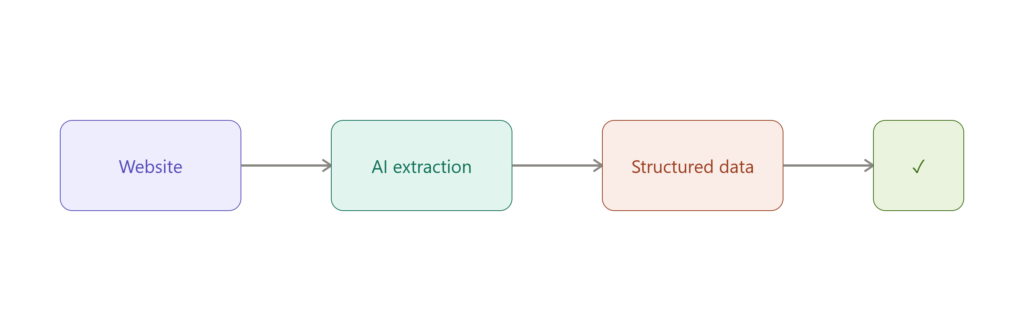
Real example: Browse AI. Browse AI is a no-code web scraping and monitoring tool, allowing users to extract structured data from websites and track changes over time without writing a single line of code — a task that would otherwise require hiring a developer or learning to code directly. Its affiliate program, available through PartnerStack, offers a notably attractive structure: 20% recurring commission for the lifetime of the referred customer, meaning a single successful referral can continue generating income for as long as that customer remains subscribed, rather than capping out after a single year like some other SaaS programs.
Given how quickly this category is growing, content covering AI tools, automation, or no-code solutions tends to attract strong, timely search interest, making it one of the more dynamic categories for affiliates willing to stay current with a fast-moving space.
Because this space evolves so quickly, content that stays genuinely current — reflecting recent feature updates, new use cases, and honest comparisons against newly emerging competitors — tends to substantially outperform older, unmaintained articles that no longer reflect a tool’s actual current capabilities.
Fintech & Rewards/Cashback Ecosystems
The problem this category solves: Traditional advertising and affiliate models rely heavily on search engine visibility and content-driven traffic, which leaves out an enormous, highly engaged audience: people who use financial products and shopping platforms directly, often through apps they check daily, entirely independent of what they’re searching for on Google at any given moment.
Why it matters: Fintech and rewards-based ecosystems solve this by tapping into existing financial platforms — credit cards, cashback apps, shopping rewards programs — with audiences that are already engaged, already spending, and already primed to respond to targeted offers, without requiring an affiliate to build search traffic from scratch. This represents a meaningfully different distribution channel than traditional content-driven affiliate marketing, valuable specifically because it’s largely insulated from the search engine ranking volatility that affects more traditional SEO-driven affiliate strategies.
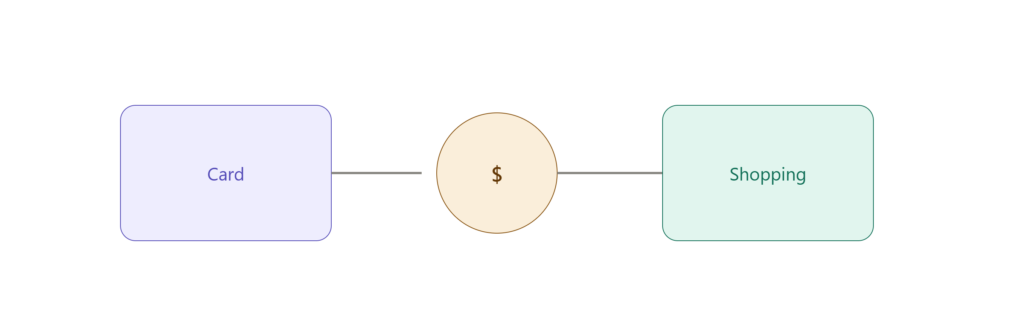
Real examples: Capital One Shopping and LUX Rewards. Capital One Shopping brings a card-linked offer model to the B2B partner space, leveraging its existing cashback ecosystem and granular audience targeting capabilities — a technology-driven approach that’s relatively new to B2B partnerships despite being well-established on the consumer side. LUX Rewards, similarly, offers a Mastercard-backed rewards partnership with access to an audience of over 20 million business cardholders, operating through what’s sometimes described as a “closed gateway” system where users log in specifically to shop and earn rewards, meaning it doesn’t depend on search engine rankings at all to reach its audience.
This category is particularly relevant for affiliates and agencies working with data-driven marketing, media buying, or e-commerce consulting audiences, rather than typical blog-based content creators, since it operates through a fundamentally different distribution mechanism than search-driven traffic.
For affiliates positioned to work with this category — often agencies or consultants rather than solo bloggers — the value lies less in traditional content creation and more in strategic partnership positioning, helping clients access these established, high-engagement ecosystems rather than trying to replicate that reach independently.
Review & Lead-Generation Platforms
The problem this category solves: Businesses shopping for software face an overwhelming number of options in nearly every category, with limited reliable, unbiased ways to compare them beyond marketing claims made directly by the vendors themselves. At the same time, SaaS companies need a reliable way to reach genuinely interested buyers who are actively in the decision-making process, rather than casual browsers.
Why it matters: Review and lead-generation platforms solve this two-sided problem by aggregating comparisons, reviews, and buying guides in one place for software shoppers, while giving SaaS companies access to qualified, high-intent leads who’ve demonstrated genuine buying interest by engaging with comparison content. This matters because it shortens and clarifies an otherwise confusing purchasing process for buyers, while giving vendors a more efficient way to reach customers than broad, unfocused advertising.
Real example: TechnologyAdvice. TechnologyAdvice operates as a technology research and lead-generation platform, helping software buyers compare options across categories while connecting vendors with qualified prospects actively researching solutions. Available through PartnerStack, it represents a strong fit for affiliates who already create comparison content, buying guides, or “best of” roundups covering business software, since the platform’s core function closely mirrors the kind of content many affiliate sites already produce.
This category works especially well for established affiliate sites with existing comparison and review content, since it essentially formalizes and monetizes a content type many affiliates are already creating.
Sites that already publish detailed “X vs Y” comparisons or annual “best software for [use case]” roundups are particularly well-positioned here, since lead-generation platforms in this category often reward exactly that kind of structured, comparison-driven content that helps genuinely undecided buyers make a final decision.
New to affiliate marketing? Start with our beginner-friendly guide and learn the exact steps to build your first affiliate income online. https://ezmakaffiliates.com/affiliate-marketing-for-beginners-how-to-start/
Editorial & Publishing Partnership Tools
The problem this category solves: Many SaaS companies struggle to secure genuine, credible editorial coverage — the kind of organic mention in a respected publication or established blog that carries far more trust than a paid advertisement. At the same time, established publishers and content sites often have valuable editorial real estate and audience trust that’s difficult to monetize without compromising their credibility through obviously promotional content.
Why it matters: Editorial and publishing partnership platforms solve this by creating a structured, cost-per-click model for securing genuine editorial coverage, letting SaaS companies access trusted publications in a way that feels native to the content rather than like a disruptive advertisement, while giving publishers a monetization path that doesn’t require them to sacrifice editorial integrity or clutter their site with obvious banner ads.
Real example: Linkby. Linkby operates a cost-per-click editorial and publishing partner program, helping brands secure premium editorial coverage through a performance-based model rather than a flat sponsorship fee. This structure benefits established content sites specifically, since it rewards genuine reader engagement with covered brands rather than simply charging for space regardless of whether readers actually click through or engage.
This category is most relevant for affiliates who run more established, editorially-focused publications with genuine reader trust already built, rather than newer sites still building their initial audience and credibility.
For sites that fit this profile, editorial partnerships can complement rather than replace direct affiliate promotion, offering an additional monetization layer built specifically around the trust an established publication has already earned with its readers over time.
How to Match a Category to Your Niche
With several distinct SaaS categories now covered, the natural next question is which ones deserve your attention specifically. As covered in our niche selection guide, the strongest fit comes from matching a category to both your existing content and your audience’s genuine, felt needs — not simply picking whichever category offers the highest headline commission.
Start by reviewing your existing content and identifying which categories align naturally with topics you already cover. A site focused on remote work and freelancing has an obvious natural fit with productivity tools; a site covering small business operations aligns well with HR and operations software; a marketing-focused site fits naturally with conversion optimization or social listening tools. Rather than forcing an unrelated category onto your existing audience, look for the categories where your readers are already asking related questions.
From there, consider your audience’s stage in their business journey. Early-stage entrepreneurs and freelancers tend to respond well to productivity and no-code AI tools that solve immediate, tangible problems cheaply. More established small business owners tend to engage more with HR, operations, and marketing optimization tools, since they’ve typically already solved the more basic productivity questions and are now managing more complex operational challenges.
Finally, weigh commission structure against genuine audience fit, as covered throughout our broader programs guide — a recurring commission program in a category your audience only mildly cares about will likely underperform a lower-commission program in a category they’re genuinely, actively searching for solutions to.
It’s also worth thinking beyond a single category once you’ve established initial traction. Many of the categories covered in this guide naturally complement each other — a site that starts with productivity tools, for instance, often finds natural crossover appeal with AI and automation content, since both audiences are drawn to solving inefficiency in similar ways. Rather than treating category selection as a single, permanent decision, think of it as a starting focus that can expand into adjacent categories as your content library and audience trust both grow over time, echoing the content-cluster approach covered in our SEO guide.
New to affiliate marketing? Start with our beginner-friendly guide and learn the exact steps to build your first affiliate income online. https://ezmakaffiliates.com/affiliate-marketing-for-beginners-how-to-start/
Signs a SaaS Category Isn’t the Right Fit for Your Audience
Just as there are positive signals worth looking for when choosing a category, there are warning signs that a particular SaaS category might be a poor match, worth recognizing before investing significant content effort into it.
If your audience’s questions and comments rarely touch on business operations, team management, or professional workflows at all, most B2B SaaS categories will likely struggle to resonate, regardless of how well-written your content is. Similarly, if you find yourself needing to explain the basic business problem a tool solves — rather than your audience already recognizing that problem from their own experience — that’s often a sign you’re introducing a category cold rather than meeting an existing, felt need.
Weak early engagement on initial test content is another useful signal: if a small number of trial articles in a new SaaS category produce minimal traffic, comments, or clicks compared to your typical content, that’s worth taking seriously as an indication of mismatch before committing further content resources to that specific category. As covered throughout our niche and validation guides, testing on a small scale before fully committing remains one of the most reliable ways to avoid investing months into a direction that simply isn’t resonating with your specific audience.
Common Mistakes When Promoting SaaS Tools
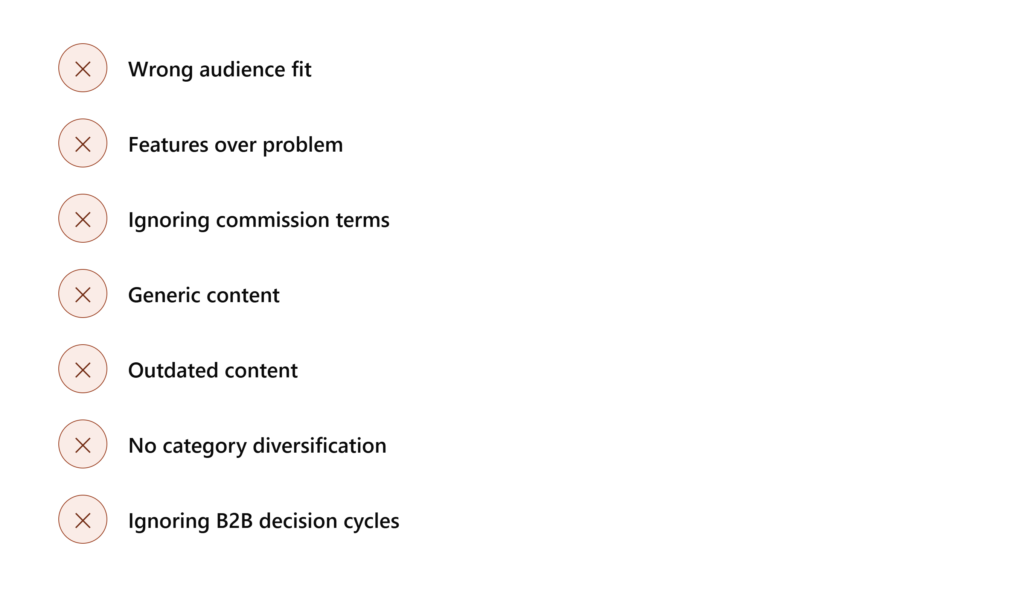
- Promoting tools outside your audience’s actual needs. As covered above, forcing an unrelated SaaS category onto an audience that has no genuine use for it tends to produce weak conversions regardless of how strong the commission terms are. Even a generous recurring commission can’t overcome a fundamental mismatch between what a tool does and what your readers actually need.
- Focusing only on features instead of the problem solved. Readers connect far more with content that clearly explains what problem a tool solves for them specifically, rather than a dry, feature-by-feature rundown that reads like a spec sheet. Lead with the pain point, not the product’s marketing language.
- Ignoring commission structure differences across categories. As this guide has shown, structures vary meaningfully — from tiered CPA models to lifetime recurring commissions — and treating every program as functionally identical leads to inaccurate income expectations and poor prioritization of your promotional effort.
- Writing generic content that could apply to any tool. SaaS buyers are often relatively sophisticated researchers; content that demonstrates real, specific understanding of a tool’s use case tends to convert far better than vague, interchangeable praise that could just as easily describe a competitor.
- Neglecting to update content as SaaS products evolve. Software changes far more frequently than physical products — pricing, features, and even entire product positioning can shift, and outdated affiliate content can quickly become inaccurate or misleading, damaging the trust your recommendations depend on.
- Overlooking category diversification. Relying on a single SaaS category, as covered in our broader programs guide’s portfolio-building section, leaves you more exposed if that specific category’s demand or program terms shift unfavorably, rather than spreading that risk across a few related categories.
- Underestimating longer B2B decision cycles. Business software purchases often take longer to close than typical consumer purchases, and expecting immediate conversion results without accounting for this longer consideration period can lead to premature disappointment with an otherwise sound content strategy.
Want to create realistic AI voiceovers, voice cloning, and professional audio content? Read our in-depth ElevenLabs review to see if it’s the right tool for your needs. https://ezmakaffiliates.com/elevenlabs-review-2026/
Frequently Asked Questions (FAQ)
1. What exactly does “SaaS” stand for and mean?
SaaS stands for Software as a Service — software that’s hosted in the cloud and accessed over the internet through a subscription, rather than installed and managed directly on your own device.
2. Why do SaaS companies offer such generous affiliate commissions?
Because a single successful referral often produces recurring subscription revenue over months or years, not just a one-time sale, making SaaS companies willing to share a meaningful portion of that ongoing value with affiliates who bring in customers.
3. Which SaaS category is easiest for beginners to start promoting?
Productivity and AI/automation tools tend to be among the most approachable starting points, since their value propositions are broadly relatable and don’t require highly specialized business or technical knowledge to explain convincingly.
4. Do all SaaS affiliate programs offer recurring commissions?
No — as covered throughout this guide and our broader programs review, structures vary significantly, ranging from one-time, tiered CPA payouts to lifetime recurring percentages, so it’s important to check each specific program’s terms individually.
5. Can I promote SaaS tools without a business-focused audience?
It’s more difficult, since most SaaS categories are built around solving specific business problems, but categories like AI/automation and productivity tools do have some crossover appeal with general productivity or freelancing audiences beyond strictly formal business readers.
6. How do I find which SaaS category best fits my existing content?
Review your current content for recurring themes and reader questions, then match those themes against the categories covered in this guide — the strongest fit usually already exists within topics you’re organically drawn to writing about.
7. Is it better to specialize in one SaaS category or promote several?
A focused approach within one or two closely related categories, as covered in our niche selection guide, tends to build stronger topical authority and content depth than spreading thin across many unrelated categories at once.
8. How is SaaS different from a regular downloadable app or program?
Traditional downloadable software is installed and runs locally on your own device, with updates managed manually, while SaaS is hosted remotely and accessed through a browser or lightweight app, with updates, maintenance, and infrastructure handled entirely by the provider.
9. Do SaaS affiliate programs require technical knowledge to promote?
Not necessarily — while a genuine understanding of the problem a tool solves helps you write more convincing content, most SaaS affiliate content focuses on the business use case and outcomes rather than requiring deep technical expertise about how the software works internally.
Key Takeaways Before You Start Promoting
- SaaS represents a fundamentally different software delivery model than traditional installed programs, built around ongoing subscriptions rather than one-time purchases — and that recurring-revenue structure is exactly why many SaaS affiliate programs offer such attractive commission terms.
- Each category covered in this guide solves a distinct, genuine business problem — productivity chaos, conversion uncertainty, HR compliance risk, reputation blind spots, manual technical work, untapped engaged audiences, buyer research overwhelm, and editorial credibility gaps.
- The strongest affiliate fit comes from matching a category to your existing audience’s genuine, already-expressed interests, not simply chasing the highest headline commission rate in isolation.
- Commission structures vary dramatically across categories and even within them — from tiered CPA models to lifetime recurring percentages — making it essential to understand each specific program’s terms rather than assuming uniformity.
- Content depth and specificity consistently outperform generic, interchangeable promotional writing, particularly with the relatively sophisticated buyers who research B2B software purchases carefully before committing.
Looking for discounted business-class flights and luxury travel deals? Read our in-depth AranGrant review to discover its features, pricing, pros, cons, and whether it’s worth using in 2026. https://ezmakaffiliates.com/arangrant-review-2026/
Conclusion
SaaS has fundamentally reshaped how modern businesses operate, replacing scattered, manually managed processes with centralized, subscription-based tools across nearly every function — productivity, marketing, HR, brand monitoring, automation, finance, research, and even editorial partnerships. For affiliate marketers, this shift represents a genuinely significant, still-growing opportunity, but succeeding in it requires more than simply picking a tool with an appealing commission rate.
Understanding what specific problem each category of SaaS tool solves — and why that problem genuinely matters to the businesses experiencing it — is what separates generic, low-converting promotional content from genuinely persuasive recommendations that resonate with a real, felt need. This distinction matters more in B2B SaaS than in almost any other affiliate category, since business buyers tend to research more carefully, compare more thoroughly, and respond far better to content that demonstrates genuine understanding than to content that simply lists features and hopes for a click.
Use the categories and examples in this guide as a foundation, then match them against your own audience’s genuine interests and questions, as covered throughout this broader content series, before committing your promotional efforts to any single tool or category. The businesses behind these tools are, ultimately, solving real problems for real people — and the affiliate content that performs best is the content that never loses sight of that fact.
Ready to explore specific SaaS affiliate programs? Explore more in-depth guides at [ezmakaffiliates.com].
Curious about how much affiliate marketers really earn? Discover the realistic income ranges, key factors that affect earnings, and what you can expect as a beginner in 2026. https://ezmakaffiliates.com/how-much-do-affiliate-marketers-really-make/