
With new console games routinely priced at $70 and climbing, and digital subscriptions like Xbox Game Pass and PlayStation Plus dominating the conversation around “value” in gaming, it’s fair to ask whether a mail-based game rental service still has a place in 2026. GameFly has been operating since 2002, quietly outlasting most of its original competitors, and it remains one of the few services still built entirely around renting physical game discs by mail.
In this review, we’ll break down exactly how GameFly works, what it actually costs, which platforms and games it supports, and — most importantly — whether it’s genuinely worth subscribing to in 2026 given how much the gaming landscape has shifted toward digital access. We’ll cover the real strengths and the real limitations, drawing on both the service’s own claims and independent customer feedback, so you can make an informed decision before signing up.
Want to understand the software tools powering modern businesses? Explore our complete SaaS guide and discover how these cloud-based solutions can improve productivity, automation, and growth. https://ezmakaffiliates.com/saas-tools-explained-the-ultimate-guide/
What Is GameFly?
GameFly is a subscription-based video game rental service, founded in 2002, that delivers physical game discs directly to your mailbox — often described as “the Netflix DVD model, but for video games.” The comparison is apt: GameFly launched during the same era as Netflix’s original disc-by-mail service, applying a nearly identical logic to console games instead of movies, and has continued operating that core model for well over two decades while countless competitors in the disc-rental space have shut down entirely.
Members build a queue of titles they want to play, GameFly ships the next available game from that queue, and once you’re finished and mail it back, the next title ships out automatically. The service is now operated under GameFly Holdings, LLC, and continues to position itself as the leading dedicated video game rental service still active in the market.
The service covers an unusually wide range of platforms for a rental service still operating today, including PlayStation 5, PlayStation 4, Xbox Series X, Xbox One, Nintendo Switch and Switch 2, along with support for older systems and 4K UHD and Blu-ray disc rentals. GameFly’s library includes more than 8,000 movies and games combined, spanning new releases alongside classic titles that may be harder to find secondhand elsewhere.
It’s worth noting that GameFly discontinued a separate video game streaming service back in 2018, and today operates exclusively as a physical, mail-based rental and purchase service — a detail worth knowing if you’ve seen older references to GameFly streaming that no longer apply.
How GameFly Works: The GameQ System
Using GameFly centers around what the service calls your “GameQ” — a personal queue of games you want to play, ranked in the order you’d like to receive them.
- Build your queue. Browse GameFly’s catalog and add games you’re interested in, arranging them in priority order.
- Receive your rental. GameFly ships the highest-priority available title from your queue directly to your mailbox.
- Play with no due dates. Unlike old-school video rental stores, GameFly does not charge late fees, and you can keep a rented game as long as you like before sending it back.
- Return and repeat. Once you mail the game back using the included prepaid packaging, GameFly automatically ships the next title in your queue.
- Keep it if you love it. If you decide you don’t want to return a game, GameFly’s KEEP option lets you purchase it — often at a discounted member price rather than full retail.
Curious whether GameFly still makes sense in 2026? See current plans and pricing here.
This system means your effective “backlog” is managed for you — rather than committing to buy a game you might dislike, you can try it, decide relatively quickly whether it’s worth continuing, and move on to the next title in your queue without financial regret sitting on a shelf.
Pricing & Plans
GameFly offers several subscription tiers, generally split between combined games-and-movies plans and pricing that scales based on how many discs you can have out at once.
Based on recent published pricing, a basic single-disc Games + Movies plan has run in the range of roughly $9.50 for an initial promotional period before increasing to somewhere around $15.95 per month afterward, while an upgraded, multi-disc plan has run higher — reported around $13.50 initially, rising to roughly $22.95 per month. A movies-focused “Elite” tier, including 4K Ultra HD options, has been reported around $11 initially and $18.95 per month afterward.
Important: verify current pricing before publishing or promoting. GameFly has adjusted its pricing more than once in recent years, and the figures above reflect recently reported rates rather than confirmed, real-time pricing — check GameFly’s official pricing page directly before including specific dollar amounts in published content.
Plan tiers generally differ based on how many discs you can have checked out simultaneously, similar to how older DVD-by-mail services structured their offerings — a single-disc plan suits more casual players, while multi-disc tiers let heavier players keep more titles in rotation at once, reducing the impact of any single game’s shipping wait on your overall play time.
Want to see the GameQ system in action? Explore GameFly’s full catalog here.
As a loyalty incentive, GameFly members earn “GameFly Dollars” — currently structured as five dollars in credit for every three months of active membership — which can be applied toward keeping rental games or purchasing additional titles from GameFly’s marketplace.
Platforms & Game Library
GameFly’s platform coverage is genuinely broad for a service still centered on physical media. Supported platforms include PlayStation 5, PlayStation 4, PlayStation 3, PS Vita, Xbox Series X, Xbox One, Xbox 360, Nintendo Switch, Switch 2, Wii U, and 3DS, alongside standalone 4K UHD, Blu-ray, and DVD movie rentals.
Sound like GameFly might be a fit for your gaming habits? Check it out here.
With a combined library of over 8,000 movies and games, GameFly’s selection spans day-one new releases down to older, sometimes hard-to-find classics — a genuine advantage for gamers looking to revisit older titles without needing to track down and purchase secondhand physical copies individually.
[IMAGE 2 — Insert an image here showing a grid or collage of game covers across PS5, Xbox, and Switch platforms. Alt text: “GameFly game library platforms 2026”]
The KEEP Option: Buying Rented Games
One of GameFly’s more distinctive features is the ability to purchase a game you’ve rented rather than returning it, typically at a discounted price compared to buying it new or through GameFly’s separate marketplace at full price. This “try before you buy” structure is particularly useful for gamers who are hesitant to spend $70 on a new release based purely on trailers or reviews, letting you actually play a meaningful portion of the game before deciding whether it’s worth owning permanently.
Ready to compare plans for yourself? Check GameFly’s current pricing here.
Beyond the KEEP option for rentals already in hand, GameFly also operates a broader marketplace for buying used consoles, controllers, games, and collectibles directly, independent of the rental queue — giving budget-conscious gamers another avenue for building out a physical game collection at below-retail prices.
Curious about how much affiliate marketers really earn? Discover the realistic income ranges, key factors that affect earnings, and what you can expect as a beginner in 2026. https://ezmakaffiliates.com/how-much-do-affiliate-marketers-really-make/
The GameFly Marketplace: Buying Used Games and Consoles
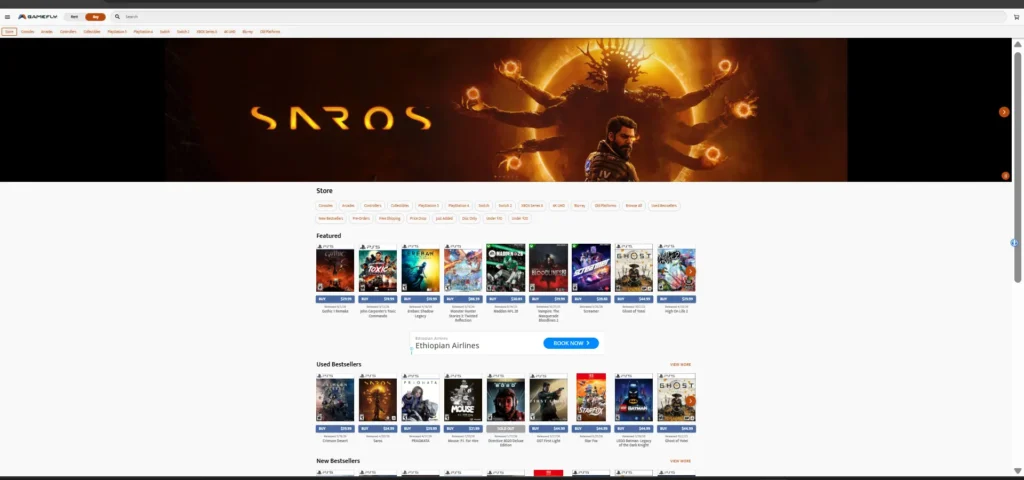
Separate from the core rental queue, GameFly runs an online marketplace where members and non-members alike can shop for used games, consoles, controllers, and gaming collectibles at discounted prices compared to buying new. This marketplace functions as a standalone storefront rather than requiring an active rental subscription, giving casual buyers a way to shop for deals even if they’re not interested in the ongoing rental service itself.
Popular categories in the marketplace typically include recently released titles once enough rental copies have cycled through and become available for resale, alongside a deep catalog of older, classic games spanning multiple console generations. Members can browse by new arrivals, price range, or discounted “bargain bin” listings, making it a reasonable option for building out a physical game library affordably over time, particularly for older titles that have become harder to find at traditional retail.
For active rental subscribers, GameFly Dollars earned through membership can also be applied toward marketplace purchases, adding an additional incentive to browse the marketplace regularly rather than treating it as a separate, disconnected feature from the core rental experience.
Shipping Times and the Real Customer Experience
Since GameFly’s entire model depends on physical shipping in both directions, this is genuinely the area where the service lives or dies for most users, and it’s worth addressing directly rather than glossing over.
Under normal circumstances, GameFly ships from regional distribution centers, and turnaround time depends heavily on your specific location relative to the nearest center, along with current demand for the specific title in your queue. Independent reviews published in 2026 have specifically flagged increased wait times for some in-demand new releases compared to the service’s earlier years, along with occasional availability gaps on particularly popular titles during launch windows. These reviews represent aggregated customer experiences rather than a guarantee that every member will encounter the same delays, but it’s a pattern worth being aware of rather than assuming shipping will always be fast.
Return shipping is handled through prepaid packaging included with each rental, removing the need to cover return postage yourself — a detail that keeps the ongoing cost predictable even if the exact shipping speed varies by region and demand.
What Real Customers Say
Beyond GameFly’s own marketing claims, independent customer review platforms provide a useful additional lens on the real, day-to-day experience of using the service. Verified customer feedback tends to cluster around a few consistent themes worth weighing alongside the service’s own description of itself.
On the positive side, longtime subscribers frequently cite the sheer value of unlimited rentals for a flat monthly fee as the primary reason they’ve stayed subscribed for years, particularly compared to the cumulative cost of buying multiple new releases individually at full retail price. The breadth of the platform library — spanning current-generation consoles down to older, sometimes discontinued systems — also draws consistent praise from collectors and retro gaming enthusiasts who struggle to find some older titles through other channels.
On the more critical side, the most commonly repeated complaints center on shipping-related friction: slower-than-expected delivery times, particularly for high-demand new releases during their first few weeks after launch, and occasional availability gaps where a specific title in a member’s queue simply isn’t in stock at the nearest distribution center. These reviews represent individual customer experiences rather than proof that every member will encounter the same friction, but the pattern is consistent enough across independent review platforms to be worth taking seriously when setting your own expectations.
Taken together, this customer feedback broadly reinforces the core trade-off this review has covered throughout: genuine cost savings and library breadth, weighed against the real, physical-shipping-based limitations that a digital-first competitor simply doesn’t have to contend with.
Pros
- No due dates or late fees, letting you play at your own pace without the pressure that made old video rental stores frustrating.
- Try-before-you-buy flexibility through the KEEP option, reducing the risk of spending full price on a game you end up not enjoying.
- Broad platform support, covering current-generation consoles alongside several older systems many digital-only services have long since dropped.
- Large combined library of more than 8,000 games and movies, including titles that can be genuinely difficult to find secondhand elsewhere.
- Loyalty rewards through GameFly Dollars, adding ongoing value for long-term subscribers beyond the base rental service.
- Free trial available for new members, offering a no-cost way to test the service before committing to a paid plan.
- Prepaid return shipping included, keeping the ongoing cost predictable without needing to cover postage separately.
- Standalone marketplace access, letting you shop for discounted used games and consoles even independent of the core rental queue.
Cons
- Physical shipping means real delays, unlike instant digital access — you’re waiting on mail delivery in both directions, which some recent customer reviews specifically flag as a growing pain point for newer releases.
- Availability issues on popular new titles, with independent reporting in 2026 noting increased wait times for some in-demand games compared to the service’s earlier years.
- Pricing has increased over time, and the promotional introductory rate jumps meaningfully once the initial period ends — worth budgeting for rather than being surprised by later.
- No instant digital access, meaning GameFly simply isn’t a fit for anyone who values same-day access to new releases over cost savings.
- Discontinued streaming option, so anyone expecting a streaming component alongside the physical rentals will be disappointed — the service is mail-only going forward.
- Distribution center location affects speed, meaning shipping times can vary meaningfully depending on how close you are to GameFly’s nearest regional facility, a factor outside your direct control.
- Not ideal for one-off casual players, since the ongoing monthly subscription cost only pays off relative to buying individual games if you’re renting with reasonable regularity.
GameFly vs. Digital Subscriptions (Game Pass, PS Plus)
GameFly vs. Xbox Game Pass: Game Pass offers instant digital access to a rotating library, with no physical shipping wait at all, but titles can be removed from the library over time and you never own anything outright. GameFly, by contrast, involves waiting for physical discs but offers the KEEP option to actually purchase and permanently own a title you love — a meaningfully different value proposition depending on whether you prioritize instant access or eventual ownership.
GameFly vs. PlayStation Plus: Similarly, PS Plus offers immediate digital access bundled with online multiplayer and periodic free games, while GameFly’s physical rental model trades that immediacy for a broader, more flexible “try anything in the queue” structure without being limited to whatever a digital service happens to be rotating into its library that month.
Neither model is objectively superior — digital subscriptions win decisively on convenience and instant access, while GameFly’s physical rental-and-keep model appeals specifically to gamers who want to actually try physical titles before buying and don’t mind a short shipping wait in exchange for that flexibility and eventual ownership option.
Doing the Math: When GameFly Actually Saves You Money
Whether GameFly makes financial sense depends heavily on your specific play habits, so it’s worth walking through the actual math rather than relying on general impressions alone.
If you typically buy two to three new full-price games per month at $60-70 each, a GameFly subscription costing a fraction of that for unlimited rentals represents a substantial savings, even accounting for the possibility of occasionally using the KEEP option to purchase a favorite title outright. On the other hand, if you’re the kind of player who buys only one or two games per year and plays each one for dozens of hours, the ongoing monthly subscription cost may end up exceeding what you’d have spent buying those same titles directly, particularly once you factor in the promotional-to-standard pricing increase covered earlier in this review.
The sweet spot for GameFly’s value proposition tends to be players who enjoy trying a wide variety of titles, finish games relatively quickly, and don’t mind sending a disc back once they’re done — essentially treating games more like a rotating library than a permanent personal collection. For collectors who want to own every title they play long-term, buying directly (potentially through GameFly’s own marketplace, at discounted used prices) may ultimately prove more cost-effective than an ongoing subscription.
Who Is GameFly Best For?
Based on everything covered in this review, GameFly is a particularly strong fit for:
- Budget-conscious gamers who want to try new releases without committing $70 upfront on a title they might not enjoy.
- Collectors and completionists interested in older or harder-to-find physical titles across multiple console generations.
- Patient players who don’t mind a short shipping wait in exchange for lower overall cost and eventual ownership flexibility through the KEEP option.
- Multi-console households who want one subscription covering PlayStation, Xbox, and Nintendo titles rather than juggling separate platform-specific digital subscriptions.
It’s a weaker fit for gamers who prioritize instant digital access above all else, or anyone specifically expecting a streaming component, since that side of GameFly’s service was discontinued in 2018.
Frequently Asked Questions (FAQ)
1. Does GameFly charge late fees?
No. Members can keep rented games as long as they want without incurring any late fees, though obviously the longer you hold a title, the longer it takes for the next game in your queue to ship.
2. Can I actually buy the games I rent from GameFly?
Yes, through the KEEP option, eligible rental titles can be purchased, often at a discounted member price compared to buying new.
3. Which consoles does GameFly support?
GameFly supports PlayStation 5, PS4, PS3, PS Vita, Xbox Series X, Xbox One, Xbox 360, Nintendo Switch, Switch 2, Wii U, and 3DS, along with 4K UHD, Blu-ray, and DVD rentals.
4. Is GameFly still worth it in 2026 given digital subscriptions?
It depends on your priorities — if instant access matters most, a digital subscription like Game Pass may suit you better; if trying games before committing to a purchase and eventual ownership matter more, GameFly’s physical model still offers genuine value.
5. Does GameFly still offer game streaming?
No, GameFly discontinued its streaming service in 2018 and now operates exclusively as a mail-based physical rental and purchase service.
6. How long does it take to receive a GameFly rental?
Shipping times vary by location and current demand, and some recent reviews note longer waits specifically for popular new releases, so it’s worth setting realistic expectations rather than assuming next-day delivery.
7. Is there a free trial available?
Yes, GameFly offers a free trial period for new members, giving you a no-cost way to test the service’s queue system and shipping experience before committing to a paid plan.
8. What are GameFly Dollars and how do they work?
GameFly Dollars are a loyalty reward — members currently earn five dollars in credit for every three months of active membership, redeemable toward keeping rental games or other marketplace purchases.
9. Can I switch or cancel my GameFly plan easily?
Yes, GameFly plans are structured as ongoing monthly subscriptions that can typically be adjusted or canceled through your account settings without a long-term contract commitment, though it’s worth confirming current cancellation terms directly on GameFly’s site before signing up.
10. Is GameFly a good option for retro or older game collectors?
Yes — with support spanning current-generation consoles down through several older systems, along with a marketplace for buying used titles, GameFly is particularly useful for players interested in revisiting or collecting older games that can be difficult to find through standard retail channels.
Looking for a reliable VPN to protect your privacy and secure your online activities? Read our detailed Surfshark VPN review to see its features, pricing, pros, cons, and whether it’s worth using in 2026. https://ezmakaffiliates.com/surfshark-vpn-review-2026/
Key Takeaways Before You Sign Up
- GameFly’s core value proposition — unlimited rentals for a flat fee, no late fees, and the option to keep a title you love — remains genuinely distinctive among current gaming services in 2026.
- The math works best for players who rent regularly and finish games at a reasonable pace, rather than casual players who only buy one or two titles a year.
- Physical shipping is the service’s biggest real trade-off — expect some wait time, particularly around new release launch windows, and don’t assume instant access the way a digital subscription provides.
- Verify current pricing directly on GameFly’s site before committing, since rates have shifted more than once in recent years and the promotional-to-standard price jump is real.
- The standalone marketplace and KEEP option add genuine flexibility beyond the core rental queue, worth exploring even if you’re primarily interested in one or the other.
Final Verdict
GameFly has genuinely earned its long survival in a gaming landscape that has otherwise moved almost entirely toward instant digital access. Its core value proposition — try games before committing to full retail price, with no late fees and the flexibility to actually purchase and keep a title you love — remains distinctive among current gaming services, even if physical shipping delays are a real trade-off compared to digital-first competitors.
It isn’t the right fit for everyone. If instant access and zero waiting matter most to you, a digital subscription will likely serve you better. But for budget-conscious, patient gamers who want broad platform coverage, a massive combined library, and the option to actually own the games they end up loving, GameFly remains a genuinely useful, still-relevant service in 2026.
Ready to try GameFly? Start your free trial here and see if physical game rentals fit your gaming habits.
Looking for the best affiliate programs to maximize your earnings? Explore our top picks for beginners and experienced marketers alike. https://ezmakaffiliates.com/best-affiliate-marketing-programs-to-join/
Disclosure: This post contains an affiliate link. If you sign up through it, we may earn a commission at no extra cost to you.