


Once you’ve chosen your niche and started building traffic, the next critical piece of the puzzle is deciding which affiliate programs are actually worth your time. Not all programs are created equal — some offer generous recurring commissions that pay you every month for years, while others give a single small payout that barely covers your content-writing time.
In this guide, we’ve put together 15 of the best affiliate marketing programs to join in 2026, spanning general marketplaces, SaaS and software tools, e-commerce platforms, and specific niche products. For each one, we’ll cover what it is, its commission structure, cookie duration where available, and who it’s best suited for — so you can match programs to your specific niche and audience rather than joining blindly. We’ll also cover how to get approved faster, the difference between high-ticket and recurring income, red flags to watch for, and the mistakes that quietly cost new affiliates real money.
Want to choose a profitable niche? Read our complete guide before you start building your affiliate website. https://ezmakaffiliates.com/how-to-choose-a-profitable-affiliate-marketing-niche/
How We Chose These Programs
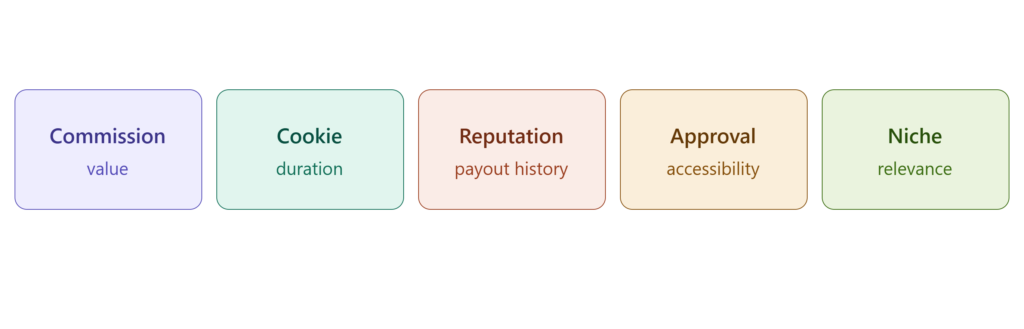
Before diving into the list, it’s worth understanding the criteria that separate a genuinely good affiliate program from one that looks appealing on paper but underperforms in practice.
- Commission structure and value. We looked beyond the raw percentage to consider average order value and whether commissions are one-time or recurring, since a smaller percentage on a high-value or recurring product often outperforms a large percentage on a cheap, one-time sale.
- Cookie duration. Longer cookie windows mean you still get credit for a sale even if the customer doesn’t buy on their first visit — anywhere from 24 hours on the short end to 90 days or more on the generous end. This matters most for higher-consideration purchases, where buyers rarely commit on their very first visit to a site.
- Reputation and payment reliability. A high commission rate means little if a program has a history of delayed payouts or unreliable tracking, so we prioritized established programs with a track record of paying affiliates on time and accurately crediting referred sales.
- Approval accessibility. Some programs are open to virtually anyone, while others require an existing audience or specific traffic sources — we included a mix of both so beginners have realistic entry points alongside more advanced, higher-paying options to grow into.
- Relevance across niches. Rather than focusing only on one category, this list spans general marketplaces, SaaS tools, e-commerce platforms, and niche-specific products so you can find fits for a wide range of content strategies and audience types.
15 Best Affiliate Marketing Programs to Join in 2026
1. Amazon Associates
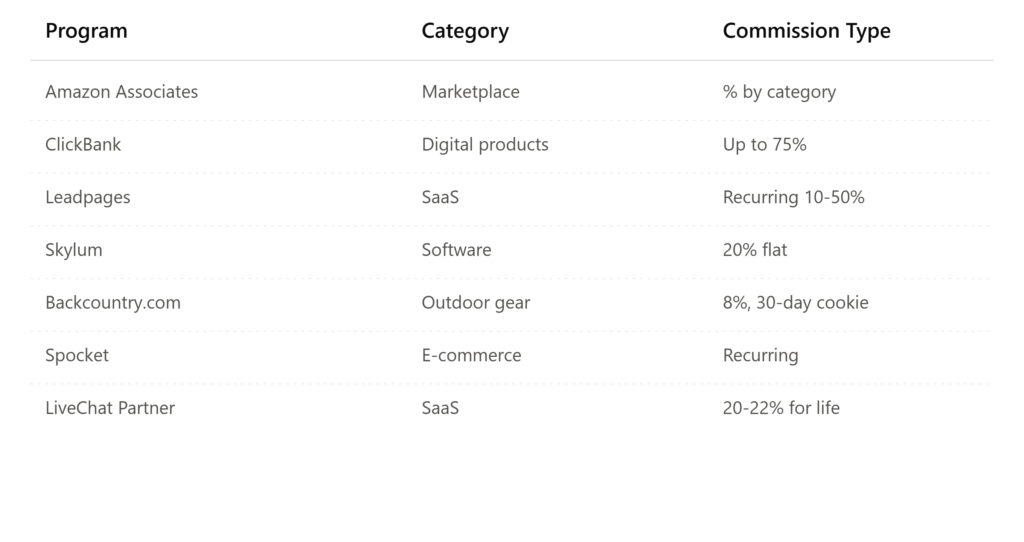
Amazon’s affiliate program remains one of the most beginner-friendly options simply because of the trust and brand recognition it carries — most shoppers already know and use Amazon, which tends to make that first click easier to convert than with a lesser-known retailer. Commission rates vary by product category, and the cookie duration is notably short at just 24 hours, meaning you only get credit if the customer purchases within a day of clicking your link. The minimum payout threshold is low, around $10, making it accessible even for smaller sites. Its biggest strength is versatility: almost any physical product niche can find something relevant to promote through Amazon’s catalog, which makes it a natural first program for beginners still figuring out what converts best for their audience. Best for: general product reviews and “best of” listicles across almost any niche.
2. ClickBank
ClickBank operates as both an affiliate network and marketplace, hosting thousands of digital products across categories like health, finance, self-improvement, and online courses. Commission rates here can run unusually high, sometimes up to 75%, since digital products carry far lower overhead than physical goods. Because approval for individual products is often instant, ClickBank is a popular choice for affiliates who want to start promoting immediately without waiting days or weeks for manual review. Best for: content creators in health, finance, or education niches promoting digital courses, ebooks, or software.
3. ShareASale
ShareASale is a large affiliate network connecting publishers with thousands of merchants across nearly every niche imaginable, from fashion to home goods to software. Rather than being a single program, it’s a hub where you can browse and apply to individual merchant programs that fit your specific content, all managed through one central dashboard and one consolidated payment. Best for: affiliates who want to diversify across multiple brands within one dashboard rather than managing many separate program logins.
4. CJ Affiliate (Commission Junction)
CJ Affiliate is one of the oldest and most established affiliate networks, hosting programs from major, recognizable brands. One notable example available through CJ is the Google Workspace affiliate program, which pays per-user referral commissions that can scale significantly for business accounts with many seats — a single referred company with dozens of employees can produce a meaningfully larger payout than a typical consumer sale. Best for: affiliates targeting business, productivity, and B2B software audiences.
5. Impact
Impact is a modern affiliate network known for working with well-known e-commerce and SaaS brands, offering more advanced tracking and reporting tools than some older networks. Its interface tends to appeal to more established affiliates who want granular data on click-through rates, conversion paths, and attribution across multiple campaigns. Best for: affiliates who want detailed performance data and are promoting a mix of software and consumer product brands.
6. Fiverr Affiliates
Fiverr’s affiliate program is unique in that it gives you access to an entire marketplace of freelance services — graphic design, writing, video editing, marketing, and more — rather than a single product. Its commission structure combines a flat payout with revenue-share elements depending on the service purchased. Because Fiverr solves genuinely common business problems, content recommending it tends to feel helpful rather than salesy, which often supports stronger conversion rates than more generic product promotions. Best for: content creators in business, entrepreneurship, or freelancing niches, since the marketplace naturally solves problems that audience frequently has.
7. Leadpages
Leadpages is a landing page builder aimed at small businesses and marketers who want to create high-converting pages without hiring a designer. Its affiliate program offers an upfront payout of up to $400 per new customer depending on their plan, plus recurring commissions of 10% to 50% on every renewal for the customer’s lifetime — the exact recurring rate depends on your total monthly referred sales volume, creating an incentive to scale your promotion consistently over time. Best for: affiliates in the marketing, SaaS, and small business tools space.
8. HubSpot
HubSpot’s affiliate program covers its full suite of CRM and marketing software products, offering generous, often recurring commissions well-suited to content that already discusses marketing, sales, or business growth topics. Because HubSpot serves businesses of many sizes, affiliates can tailor their recommendations toward small business owners or larger marketing teams depending on their specific audience. Best for: B2B marketing, sales, and business-focused content creators.
9. SEMrush
SEMrush is a widely used SEO and digital marketing tool, and its affiliate program is popular among content creators who already cover SEO, blogging, or digital marketing topics, since the audience overlap is nearly perfect. Many affiliates in this space find that in-depth tutorial content, showing exactly how to use specific features, converts particularly well compared to generic “best SEO tools” roundups. Best for: bloggers and YouTubers covering SEO, content marketing, or digital marketing strategy.
10. WP Engine
WP Engine offers managed WordPress hosting, and its affiliate program is known for paying substantial one-time commissions per referred customer, making it attractive for tech and web development audiences even without needing high volumes of referrals. A single referred customer can sometimes produce a payout equivalent to dozens of smaller commissions from lower-ticket programs. Best for: web design, development, and blogging-focused content.
11. Skylum
Skylum makes AI-powered photo editing software popular among both hobbyist and professional photographers. Its affiliate program offers a generous 20% commission per sale, fitting well into the growing photography and creative tools niche, where audiences are often willing to invest meaningfully in software that noticeably improves their results. Best for: photography, videography, and creative software content.
12. Backcountry.com
Backcountry.com sells outdoor gear and equipment from major brands, with an industry-standard 8% commission rate and a 30-day cookie duration. While the commission percentage is modest compared to SaaS programs, the average order value in outdoor gear tends to be high, supporting solid per-sale earnings, especially when promoting bundles like camping setups or multi-item hiking kits. Best for: outdoor, hiking, camping, and adventure niches.
13. Enigma Fishing
Enigma Fishing sells rods, reels, tackle, and accessories aimed at enthusiast anglers, offering a generous 20% commission on sales. As a highly specific niche product, it performs particularly well with content that speaks directly and credibly to an enthusiast audience — generic content rarely converts well here, but authentic, experience-based reviews often do. Best for: fishing and outdoor hobbyist content.
14. Text/LiveChat Partner Program
This program covers a suite of business communication tools, including LiveChat, ChatBot, and HelpDesk, and is built specifically around long-term recurring income. Affiliates earn 20% commission on every customer payment for as long as that customer remains subscribed, with the rate increasing to 22% after five paying referrals. It’s free to join and includes ready-made promotional materials, banners, and pre-written articles, which lowers the content-creation barrier for newer affiliates. Best for: business, customer service, and SaaS-focused content creators.
15. Spocket
Spocket is a dropshipping marketplace tightly integrated with Shopify and other e-commerce platforms, making it a natural fit for content already covering “best dropshipping apps” or “best Shopify tools” topics. Because dropshipping remains a popular entry point for new online entrepreneurs, content that clearly explains how Spocket fits into a store-building workflow tends to perform especially well. Best for: e-commerce, dropshipping, and online store-focused audiences.
New to affiliate marketing? Start with our beginner-friendly guide and learn the exact steps to build your first affiliate income online. https://ezmakaffiliates.com/affiliate-marketing-for-beginners-how-to-start/
Understanding Affiliate Disclosure Requirements
No matter which programs you join, disclosure isn’t optional — it’s both a legal requirement in many regions and a trust-building practice that actually helps conversions rather than hurting them. In the United States, the FTC requires that any affiliate relationship be clearly and conspicuously disclosed before a reader clicks a link, not buried in fine print at the bottom of a page or hidden in a separate disclaimer page they’d have to go searching for.
Good disclosure practice includes a short, clear statement near the top of a post (something like “This post contains affiliate links, which means I may earn a commission if you make a purchase, at no extra cost to you”) and repeating shorter reminders near individual links or buttons where relevant. Many affiliate programs also have their own specific disclosure requirements beyond general legal ones, so it’s worth checking each program’s terms rather than assuming one disclosure statement covers every partnership you have.
Contrary to what some beginners fear, clear disclosure doesn’t hurt conversions — in fact, readers who understand you may earn a commission, but still see you recommending a product honestly, often trust that recommendation more, not less. Transparency signals that you have nothing to hide about why you’re recommending something.
A Realistic First-Year Timeline for a New Affiliate Portfolio
To tie everything in this guide together, here’s what a realistic first year might look like for someone building an affiliate program portfolio from scratch alongside their content and traffic strategy.
Months 1–3: Join one or two easy-approval programs (like Amazon Associates or a relevant ShareASale merchant) to start immediately, even while traffic is still low. Focus primarily on publishing content and building early SEO foundations rather than expecting significant income yet.
Months 4–6: As traffic begins to grow and specific content pieces start ranking, apply to one or two higher-value SaaS or niche-specific programs relevant to your topic, using your now-published content as proof of fit during the application process.
Months 7–12: With a track record of content and some traffic data in hand, apply to more selective, higher-paying programs, and begin deliberately balancing your portfolio between high-ticket and recurring commission programs as outlined earlier in this guide. By this stage, most consistent affiliates start seeing their first genuinely meaningful monthly totals, even if modest.
This timeline will vary by niche and effort level, but it illustrates an important point: your affiliate program strategy should evolve alongside your traffic and content, not be decided once and left static for years.
High-Ticket vs. Recurring Commission Programs — Which Is Better?
When comparing affiliate programs, one of the most important distinctions is between high-ticket, one-time commissions and smaller, recurring commissions. Both can be highly profitable, but they behave very differently over time, and understanding the difference shapes how you should build your overall program portfolio.
High-ticket programs (like WP Engine or Leadpages’ upfront bonus) pay a large amount for a single successful referral — sometimes $100 to $400 in one payment. This can produce fast, substantial income from just a handful of sales, which is especially appealing for newer affiliates who want to see meaningful earnings sooner rather than waiting for smaller amounts to accumulate over many months.
Recurring commission programs (like the Text/LiveChat Partner Program or many SaaS tools) pay a smaller amount, but every single month the referred customer stays subscribed. While the first month’s payout might be modest, this income compounds as you refer more customers over time — after a year of consistent promotion, a recurring program can produce dramatically more total income than an equivalent number of one-time, high-ticket sales, since each new referral adds to a growing, ongoing monthly total rather than being a single isolated event.
In practice, the strongest long-term affiliate portfolios usually include a mix of both: high-ticket programs for faster, visible wins early on, and recurring programs that build a growing, compounding income base as your site matures. Relying entirely on one type or the other tends to leave income either too front-loaded and unpredictable, or too slow to build in the beginning when motivation and momentum matter most.

Payment Methods, Thresholds, and Payout Schedules
Beyond commission rates, the practical details of how and when you actually get paid matter a great deal for your cash flow, especially in the early months of building your site.
Most programs pay via PayPal, direct bank transfer, or check, though the available options vary by program and region — always confirm your preferred method is supported before joining, particularly if you’re located outside the United States. Minimum payout thresholds also vary widely: Amazon’s is a low $10, while some SaaS and finance-adjacent programs require $50 to $100 in accumulated commissions before releasing any payment at all.
Payment schedules typically follow either a monthly cycle (paid once you cross the threshold each month) or a net-30/net-60 schedule, meaning payment arrives 30 or 60 days after the sale is confirmed, to account for potential returns or cancellations. This delay is standard across the industry and isn’t necessarily a red flag, but it’s worth factoring into your expectations, especially if you’re relying on affiliate income for regular expenses.
Building a Balanced Affiliate Program Portfolio
Rather than joining a single program and hoping for the best, most successful affiliates build a small, deliberate portfolio that balances different strengths. Here’s an example of how that might look for a hypothetical home fitness content site.
They might join Amazon Associates as a broad, easy-approval base program for general equipment reviews, add a recurring SaaS program like a fitness app or workout planning tool for steady, compounding income, and include one or two niche-specific programs (like a specialty equipment brand offering a higher, direct commission rate) for higher per-sale value on their most detailed, high-intent reviews.
This kind of mix means no single program failure — a rate change, a program shutting down, or a policy update — can wipe out their entire income at once, while still giving them exposure to both fast, easy conversions and slower-building, compounding recurring revenue. The specific mix will look different depending on your niche, but the underlying principle — diversifying across program types, not just brands — tends to hold true across almost every successful affiliate site.
How to Get Approved Faster
Some affiliate programs, particularly higher-paying SaaS and finance programs, have stricter approval requirements than general marketplaces like Amazon. Here’s how to improve your chances of getting accepted:
- Have a live, functioning website before applying. Programs want to see that you have an actual platform, even a small one, rather than just an idea or a domain with no content on it yet.
- Publish several pieces of relevant content first. A handful of quality articles related to the product category shows reviewers you’re a genuine fit for their brand, not a random applicant with unrelated content.
- Be honest about your traffic numbers. Overstating your audience size can get your application rejected outright, or worse, get your account banned later if the mismatch is discovered during review.
- Apply to programs that clearly match your niche. A finance program is far more likely to approve a personal finance blog than an unrelated lifestyle site with no topical connection to money or budgeting.
- Follow up professionally if you’re rejected. Some programs allow reapplication after a set period once you’ve built more content or traffic — a polite follow-up email explaining your progress can sometimes turn an initial “no” into a “yes” a few months later.

Red Flags: Affiliate Programs to Be Cautious Of
Not every program that reaches out to you, or that you find while researching, is worth joining. Watch for these warning signs before committing your time to promoting a brand:
- Vague or constantly changing commission terms. If a program is unclear about exactly how and when you’ll be paid, or frequently changes its terms without notice, that unpredictability makes it hard to plan around reliably.
- No visible affiliate track record or reviews. A quick search should turn up other affiliates discussing their experience — silence or overwhelmingly negative feedback is worth taking seriously.
- Pressure to pay for “premium” affiliate access. Legitimate affiliate programs are free to join; any program asking you to pay upfront for the right to promote it deserves extra scrutiny.
- Products that seem misleading or make exaggerated claims. Promoting something you can’t stand behind honestly tends to damage your own credibility with your audience over time, even if the commission is attractive.
- Extremely long or unclear payment delays. While net-30 or net-60 is standard, indefinite “we’ll pay you eventually” arrangements without a clear schedule are a sign to look elsewhere.
Common Mistakes When Joining Affiliate Programs
- Joining too many programs at once. Spreading your content across a dozen unrelated programs makes it harder to write deeply useful, trustworthy content about any single one. Start with two or three that fit your niche well and expand gradually.
- Chasing commission percentage alone. As covered earlier, a high percentage on a low-value product can still underperform a lower percentage on a high-value or recurring one once the full math is considered.
- Ignoring cookie duration. A short 24-hour cookie window means you lose credit for any sale that happens even a day after the click — this matters more for higher-consideration purchases where people rarely buy on the very first visit to a site.
- Not reading the program’s terms of service. Some programs restrict certain promotional methods (like specific types of paid ads or coupon sites), and violating these terms — even accidentally — can get your account terminated without warning.
- Failing to disclose the affiliate relationship. Beyond being a legal requirement in many regions, missing disclosure damages the trust that makes affiliate content convert in the first place, and can also violate a program’s specific terms.
- Never checking payment reliability before joining. A generous-looking commission rate means little if the company has a reputation for delayed or missed payouts — a quick search of affiliate forums can reveal this before you invest significant time.
- Promoting products you haven’t personally reviewed or tested. Readers can often tell when a recommendation feels generic or copy-pasted, and this tends to hurt both trust and conversions over time, even if the underlying product itself is genuinely good.

How to Track Which Programs Are Actually Worth Keeping
Joining a program is only the first step — over time, you’ll want to evaluate whether each one is genuinely earning its place in your portfolio or quietly underperforming compared to the effort you’re putting into promoting it.
Track basic metrics for each program separately: total clicks generated, conversion rate, average commission per sale, and total monthly earnings. Most affiliate dashboards provide at least some of this data natively, and pairing it with a link-tracking tool like Pretty Links or Bitly lets you see exactly which specific articles or pages are driving clicks to each program.
Review this data every quarter rather than reacting to short-term fluctuations, since a single slow month doesn’t necessarily mean a program is failing — seasonal trends, algorithm changes, or even the specific products you happened to feature can all cause temporary dips. If a program consistently underperforms over two or three consecutive quarters despite genuine promotional effort, that’s a reasonable point to consider replacing it with a better-fitting alternative from your niche.
Regional Considerations When Choosing Affiliate Programs
Not every program performs equally well for every audience, and geography plays a bigger role in affiliate marketing than many beginners expect. Programs like Amazon Associates operate through separate regional programs (Amazon.com, Amazon.co.uk, Amazon.de, and so on), meaning a link built for the US store won’t earn commissions on a UK visitor’s purchase unless you set up link localization tools to redirect visitors to their local Amazon store automatically.
SaaS and software programs are generally more geography-agnostic, since digital products can be purchased and delivered anywhere, making them a good fit for sites with a genuinely international audience. Physical product and niche-specific programs, on the other hand, often ship only to specific countries or regions, which is worth checking before featuring a product prominently to an audience that may not even be able to purchase it.
If your traffic comes from multiple countries, consider using a link localization service so international visitors are automatically routed to their own regional store, rather than losing potential commissions simply because a reader’s location doesn’t match the link’s default destination.
Frequently Asked Questions (FAQ)
1. Which affiliate program is best for complete beginners?
Amazon Associates is often the easiest starting point due to its low approval barrier, broad product catalog, and strong brand trust, even though its commission rates and cookie duration are lower than many specialized programs available elsewhere.
2. Do I need a big following to join high-paying affiliate programs?
Not always. Marketplaces and networks like Amazon, ClickBank, and ShareASale generally have low or no follower requirements, while some premium SaaS programs may expect an existing website with some published content, though not necessarily a large audience or follower count.
3. Is it better to join one affiliate network or individual programs directly?
Both approaches work well. Networks like ShareASale or CJ Affiliate let you manage multiple merchant relationships from one dashboard, while direct programs (like Leadpages or HubSpot) sometimes offer better commission terms since there’s no network taking a cut in between you and the merchant.
4. What’s a good cookie duration to look for?
Anywhere from 30 to 90 days is considered strong, since it gives you credit even if a customer takes time to decide before purchasing. Very short cookie windows, like Amazon’s 24 hours, work fine for impulse-driven purchases but less well for considered, higher-priced decisions that take longer to make.
5. Can I join multiple affiliate programs in the same niche?
Yes, and it’s often smart to do so, since it lets you offer genuine comparisons between competing products rather than only promoting one option — this tends to build more trust with readers than single-brand loyalty content that ignores viable alternatives.
6. How soon can I expect to earn money after joining a program?
This depends heavily on your existing traffic. If you already have an audience or ranking content, commissions can start within weeks. For brand-new sites still building traffic, it commonly takes 3–6 months before consistent sales appear, in line with typical SEO and audience-growth timelines.
7. Should I prioritize recurring commission programs over one-time payouts?
Not exclusively — a mix of both tends to perform best, giving you faster visible income from high-ticket, one-time programs while building a compounding, long-term base from recurring ones, as discussed in the portfolio-building section above.
8. What should I do if an affiliate program changes its terms or lowers commissions?
Review the new terms carefully before deciding whether to continue promoting it. If the change significantly reduces your earning potential, it may be worth shifting your promotional focus toward a comparable program with better current terms, especially if you’ve built a diversified portfolio rather than relying on a single source.
9. Can I be part of an affiliate program without a website?
Yes, in many cases. Programs like Amazon Associates and various social-media-friendly SaaS programs allow promotion through YouTube, Instagram, or TikTok links, though having a website generally gives you more flexibility for SEO-driven, long-term traffic in addition to social channels.
A Note on Commission Rates and Program Terms
Affiliate commission rates, cookie durations, and program terms change over time — companies adjust their payout structures, acquire or get acquired by other businesses, and occasionally discontinue programs entirely. The figures shared in this guide reflect current, publicly available program details, but it’s always worth double-checking the exact current terms directly on each program’s official affiliate page before applying, rather than relying solely on any single article, including this one, as your final source of truth. Building a habit of periodically re-checking your active programs’ terms — every few months — helps ensure you’re not caught off guard by a rate change or policy update that affects your income.
Conclusion
Choosing the right affiliate programs is just as important as choosing the right niche or building the right traffic strategy — the three work together as a complete system, each amplifying the effectiveness of the others. The 15 programs covered here span general marketplaces, SaaS tools, e-commerce platforms, and niche-specific products, giving you realistic starting points no matter which direction your content takes.
Rather than joining every program that looks appealing, apply the evaluation criteria covered in this guide — commission value, cookie duration, payment reliability, approval accessibility, and niche relevance — and start with two or three that genuinely fit your content and audience. You can always expand into a broader, balanced portfolio as your site grows and your traffic strategy matures, tracking performance along the way and adjusting as programs, and your own content, evolve.
Ready to put it all together? Explore more in-depth guides at [ezmakaffiliates.com].
Want more visitors and clicks on your affiliate content? Check out our proven traffic-generation strategies to grow your audience and increase conversions. https://ezmakaffiliates.com/how-to-drive-traffic-to-your-affiliate-links/
Don’t miss our newest affiliate marketing tips, SEO guides, and online income strategies. Subscribe to our newsletter and get notified whenever we publish a new article.
One Response